NADRA CNIC Without Birth Certificate 2026
If you’ve ever sat across from a NADRA registration desk and watched someone, get turned away because they couldn’t produce a computerized birth certificate, you’d understand why this policy change matters. I’ve spoken with families in underserved districts who have been stuck in this loop for years technically eligible citizens yet locked out of a system that treats a missing piece of paper as proof of non-existence.
The National Database Registration Authority has introduced a conditional facilitation framework that allows first-time CNIC applicants to apply without a computerized birth certificate, provided they meet a set of strict biometric and record-based verification conditions. This time-bound window is valid through 31 December 2026 and if you or someone you know falls into the specific categories covered, the clock is already running.
Why This Facility Was Introduced
Pakistan’s National Identity System sits at 98.3 percent adult coverage on paper, but beneath that figure lies a more complicated reality. A meaningful slice of eligible citizens remains unregistered precisely because computerized birth certificates the standard gateway into civil documentation are simply unavailable to them. Civil documentation coverage across districts has always been uneven, and gender-based documentation gaps have compounded the problem for women.
For over ten years, registration data has quietly confirmed what field workers already knew: birth certificates were functioning as a barrier for first-time CNIC applicants rather than as a genuine identity safeguard. A structured facilitation mechanism was the NADRA Authority Board’s answer to that reality. The documentation gap wasn’t just a paperwork problem it was a participation problem. Adults without a CNIC couldn’t open bank accounts, register SIM cards for telecom verification, access formal employment, complete property transactions, connect utility services, obtain passports, or use most government services. The ripple effect ran through entire households, keeping informal and vulnerable families at risk of fraud, exclusion, and delayed access to public services.
Pakistanis in rural and underserved areas faced this birth certificate hurdle most acutely. This policy change isn’t a blanket relaxation it’s a practical solution with specific requirements and conditions for applicants.
Legal Basis of Facilitation
The mechanism draws its authority from Section 5(1)(b) of the NADRA Ordinance 2000, alongside Section 20 of the same ordinance and Rule 8 of the NADRA NIC Rules 2002, which together define the alternative verification mechanisms permitted under specific circumstances.
Validity Period
This is a time-bound window valid until 31 December 2026 and limited strictly to first-time CNIC registration cases. Standard documentation rules apply everywhere else, and they haven’t been officially extended beyond this date.
What NADRA Changed
What the NADRA CNIC issuance framework did was shift the weight of proof rather than reduce it. The identity of an applicant is now established through NADRA’s existing database records with mandatory biometric verification from registered immediate family members acting as the anchor, supplemented by automatic verification checks. Think of it this way: instead of reducing the documentary requirement by simply waving the birth certificate, NADRA is increasing identity checks through family linkage and biometric confirmation. The bar didn’t drop it moved.
Who Is Eligible
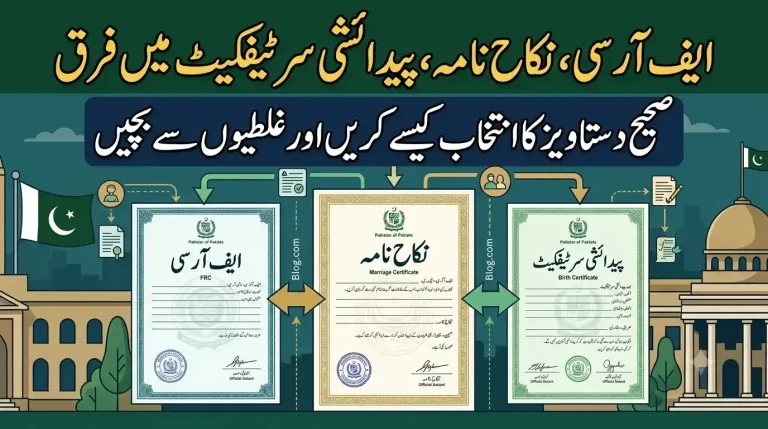
Interior Minister Mohsin Naqvi announced this conditional facility covering specific categories of applicants. A Married Woman aged 18 Years or above must present a valid Local Government Nikah Nama or marriage certificate, along with the CNIC or NICOP of either a parent or husband. Biometric verification from one parent or the husband is mandatory, and the relevant parents or applicant’s familial relationships must be traceable through existing identity cards.
For an Unmarried Female aged 18 Years or above, a valid CNIC or NICOP belonging to a parent is required, with biometric verification from one parent no husband-related condition applies, but parents must hold valid identity cards and complete biometric verification in person.
A Male Applicant Above 24 Years must present the CNIC or NICOP of a parent and/or a sibling holding a valid CNIC or NICOP, with biometric verification from one parent. The applicant’s identity is then cross-referenced against existing family records in the NADRA database.
In Cases where a Parent or Husband is Deceased, the records of those deceased individuals must already exist within the NADRA system. An authorized officer may grant an exemption from live biometric verification, relying instead on record-based linkage and internal verification. This conditional, case-based relief applies where applicants cannot meet the standard verification criteria.
How to Apply for a CNIC
The process begins by visiting a NADRA Registration Center (NRC), where a token is issued. Biometric verification including fingerprints and photographs from parents or siblings, is collected on-site as part of mandatory data capture. Attestation from parents, siblings, or a Gazetted officer may be required, and an Interview with the OIC (Officer in Charge) is conducted depending on the applicant’s specific category. Following fee submission (where applicable), the CNIC is printed and handed over after the designated processing period.
Free Non-Smart National Identity Cards
Teslin non-smart CNICs under the Normal category are issued without a fee under this framework. First-time applicants who register through this facility can obtain a non-smart national identity card at no charge a deliberate move to remove the financial barrier and encourage eligible citizens to complete registration. For all other categories, standard rules apply.
Important Legal Warning
Here’s what people often overlook, and what I always emphasize when helping anyone through this process: the identity data recorded in the National Identity System your parentage, date of birth, and place of birth is irrevocable and non-changeable once submitted. Accuracy at the time of registration is everything. Citizens are strongly advised to verify every detail before submission, because changes to critical information are not allowed afterward. Verify your details and ensure accurate submission there are no easy corrections once you’re in the system.
Where to Apply
Eligible applicants must visit their nearest NADRA Registration Centre in person. There is no online shortcut physical verification and biometric processing require you to appear at official NADRA registration centers. Be cautious of scams and fraudulent services that promise expedited processing for a fee.
What This Policy Does Not Do
This is a temporary, verification-based facility not a general relaxation of documentation requirements. It exists specifically to close the remaining registration gap while preserving the integrity of Pakistan’s identity system. It removes nothing from the verification side it replaces the document requirement with stronger biometric and record-based checks. It does not guarantee same-day CNIC issuance, and it does not remove the need for physically visiting NADRA centers for biometrics.
Why Birth Certificate Gaps Exist, and Why NADRA Is Using a Workaround
Birth registration under Local Government systems has always suffered from uneven computerization coverage across districts. Many adults over 18 simply have no computerized birth record because the Union Council registration systems in their area were weak, or because families were unaware of the requirement entirely. NADRA’s approach here is notably pragmatic rather than waiting for local systems to catch up, the authority is leveraging its own data asset: the family CNIC records and biometrics already in the database to validate the identity of applicants who fell through the local registration gap. In some cases, this reconciliation process takes additional months, which is worth factoring into your timeline.
What Applicants Should Prepare Before Visiting NADRA
Before your visit, be clear about your category whether you’re an unmarried adult, a married adult, an older male applicant, or someone with deceased parents or a deceased spouse. The most important practical step is ensuring the right NADRA staff-facing anchor is available: your parent or spouse must be present to give biometrics, which means these people need valid CNICs and the ability to physically attend the center. Biometric verification from a parent or spouse cannot be substituted they must appear physically at the center. For married women, marriage documentation in the form of the marriage certificate is integral to the verification structure. For older, previously unregistered applicants, the verification expectation will be stronger, not lighter.
What to Watch Through 2026
The deadline itself will function as a discipline mechanism families who have been delaying will likely flood NADRA centers in the last quarter before the cutoff, making early action the smarter move. Enforcement consistency across centers across Pakistan is another variable worth watching the interpretation of borderline cases can shift depending on center workload and officer discretion around how strictly document linkage checks are applied. Looking further ahead, the future integration of Local Government birth registration systems with NADRA systems will matter enormously this facilitation is a bridge, and the long-term solution still depends on strengthening Union Council registration at source.
Changes to Date of Birth Corrections
It’s worth noting that NADRA’s conditional ID card facility is entirely separate from corrections or changes to date of birth. The Government of Punjab rules and equivalent frameworks elsewhere require either an alteration entry by Union Councils, Cantonment Boards, or Municipal Corporations, or a court order from a competent authority, before any date of birth certificate modification can flow into the NADRA system. Fraudulent changes and unauthorized modifications to birth records are not legally sanctioned and will not be processed.
Recent Regulatory Reforms by NADRA
This facilitation is part of a broader modernization wave. NADRA has rolled out comprehensive new regulations across several workstreams through the NADRA Authority Board: Updated Verification Procedures that create a more structured process for examining doubtful identity records; National Identity Card Framework Amendments designed to streamline the issuance and renewal of NICs; revised Pakistan Origin Card (POC) Regulations that update the regulatory structure for overseas Pakistanis; and a Modern Procurement Regime establishing new procurement standards around transparency and efficiency in NADRA operations.
Conclusion
NADRA’s 2026 CNIC without birth certificate facility offers a valuable opportunity for eligible first-time applicants who lack a computerized birth certificate. By using biometric verification and family record linkage, NADRA ensures secure identity verification while making CNIC registration more accessible. If you qualify, gather the required documents and apply before 31 December 2026 to take advantage of this limited-time facilitation.