FRC vs Marriage Certificate vs Birth Certificate | Which Document Do You Need?
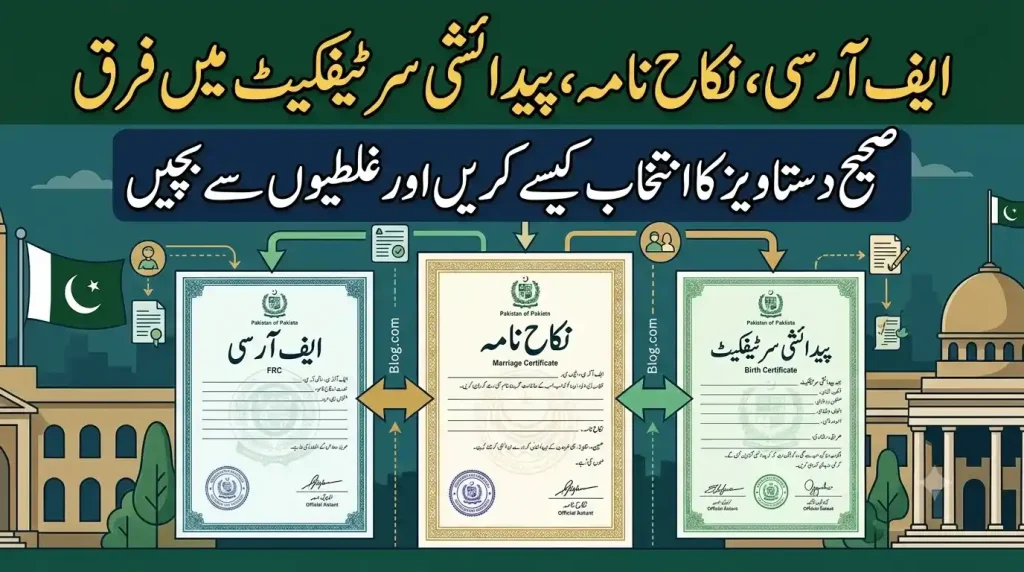
So many Pakistanis get stuck at the same moment — an embassy, a university, an immigration office, or some government department asks for a family-related document, and suddenly nobody’s sure which paper fits. One office wants an FRC (Family Registration Certificate), another insists on a Marriage Certificate, and somewhere else it’s a Birth Certificate they’re after. Since all three-carry family information in some form, it’s easy to assume they’re interchangeable. I’ve seen this confusion play out way too often to call it rare.
But each of these documents has its own job to do, and that purpose doesn’t overlap as much as people think. Hand over the wrong document and you’re looking at application delays, visa complications, or flat-out rejection of your request. Knowing the differences between them isn’t optional anymore — it’s essential, especially now in 2026, when digital verification and documentation requirements have gotten noticeably stricter than before.
What Does FRC Actually Mean?
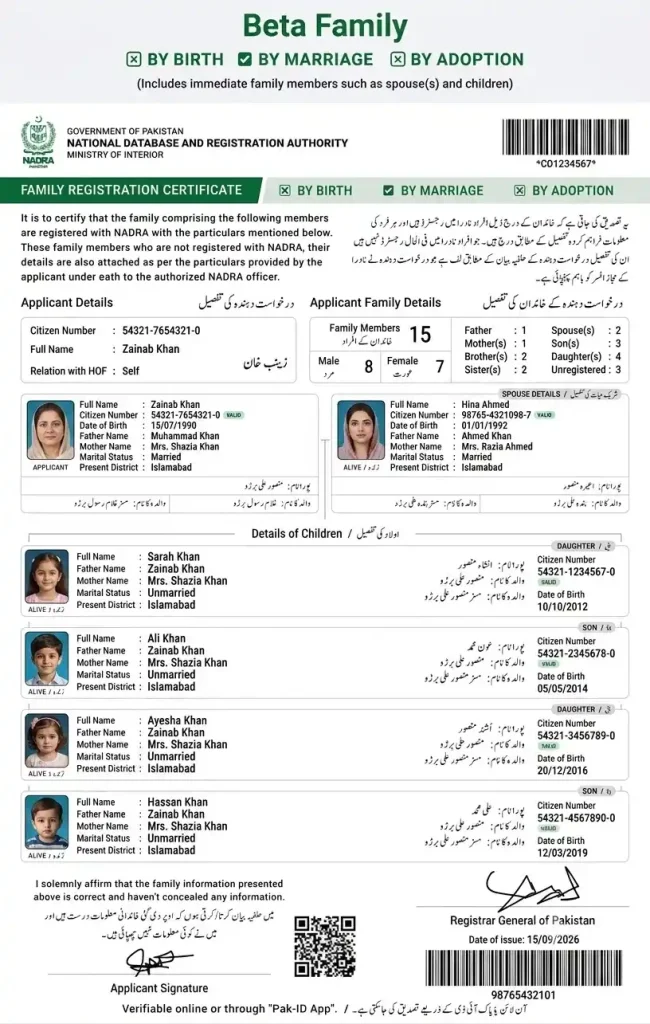
A Family Registration Certificate (FRC) is an official document issued by NADRA that shows your family relationships based on the records stored in its national database. It is linked to CNICs and B-Forms and includes details such as your parents, siblings, spouse, and children, depending on the type of FRC issued.
The FRC is commonly required for visa applications, immigration, family sponsorship, embassy verification, inheritance matters, and other legal or official purposes where proof of family relationships is needed. Unlike a birth or marriage certificate, an FRC provides a complete snapshot of your registered family composition as recorded by NADRA. To avoid delays, always submit the correct type of FRC required for your specific purpose.
What Does Marriage Certificate Actually Mean?
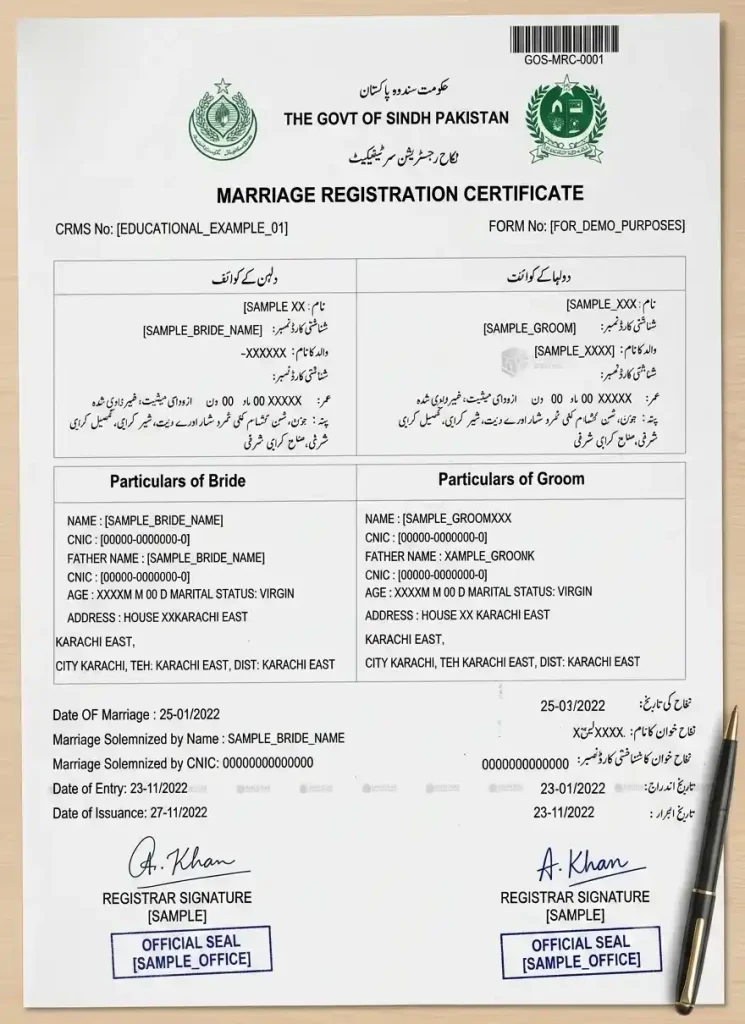
A Marriage Certificate is an official legal document that confirms a marriage between two individuals. In Pakistan, it is issued after the marriage is registered with the Union Council or another authorized registration authority. The certificate includes the names of the husband and wife, the date of marriage, registration details, and the official registration number.
Unlike a Family Registration Certificate (FRC), a Marriage Certificate only proves that a marriage has legally taken place. It does not include information about parents, siblings, or children. It is commonly required for legal, administrative, and immigration purposes where proof of marriage is needed, while an FRC is used to verify overall family relationships.
What Does Birth Certificate Actually Mean?
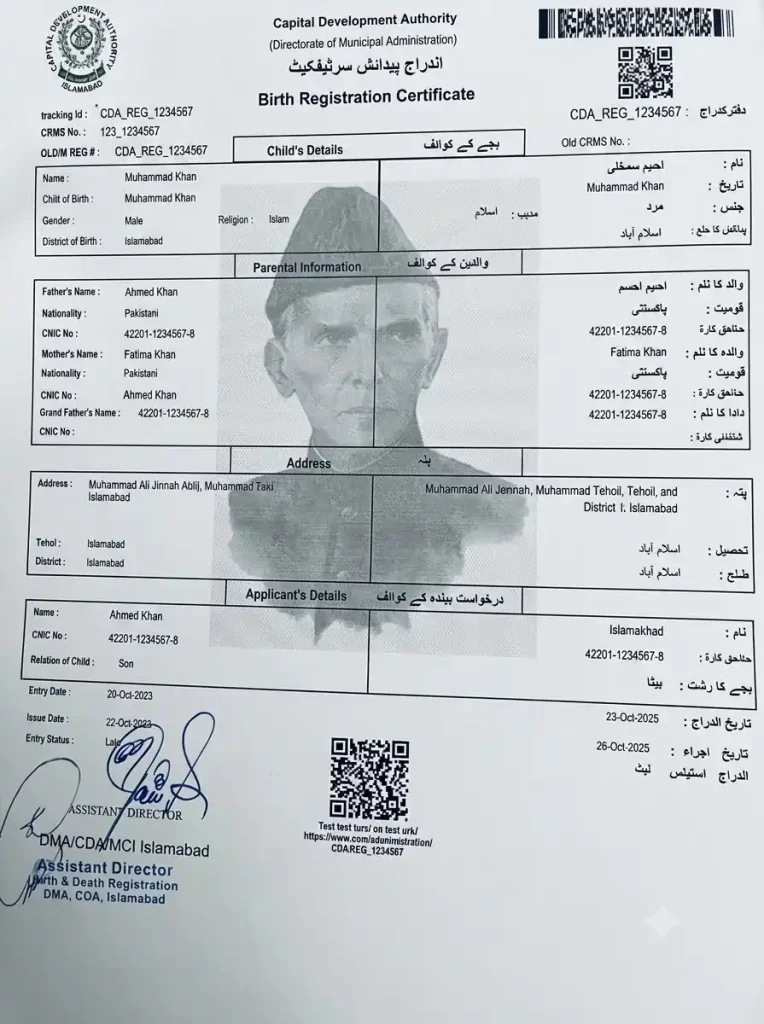
A Birth Certificate is an official document issued by the local government authority that records a person’s birth. It serves as legal proof of birth and includes essential details such as the individual’s name, date of birth, place of birth, and parents’ information.
A Birth Certificate is one of the primary identity documents used to establish a person’s legal identity. The information recorded on it is often used when applying for documents such as a CNIC, passport, and other official records. Because many government documents rely on the details in a Birth Certificate, it is important to ensure all information is accurate.
Key Difference Between FRC, Marriage Certificate, and Birth Certificate
| Feature | FRC (Family Registration Certificate) | Marriage Certificate | Birth Certificate |
|---|---|---|---|
| Primary Purpose | Verifies family relationships recorded in NADRA | Confirms a legally registered marriage | Confirms a person’s birth details |
| Issuing Authority | NADRA | Union Council / Local Government | Local Union Council / Municipal Authority |
| Legal Event Proven | Family composition and relationships | Marriage registration | Birth registration |
| Contains | Parents, spouse, children, family relationships | Husband and wife’s details, marriage date, registration information | Child’s name, date of birth, place of birth, parents’ details |
| Used For | Immigration, visa applications, family verification, inheritance, official record verification | Name change, visa applications, spouse sponsorship, legal proof of marriage | Passport, CNIC, school admission, citizenship, age verification |
| Shows Family Relationships | ✅ Yes | ❌ No | Limited (Parents only) |
| Shows Marriage Details | Only if applicable | ✅ Yes | ❌ No |
| Shows Birth Details | ❌ No | ❌ No | ✅ Yes |
| Can Replace Other Documents? | ❌ No | ❌ No | ❌ No |
When Do You Need a Marriage Certificate Instead?
A Marriage Certificate is required whenever an institution asks for proof of marriage in particular, not just general family ties. This document is specifically requested for Spouse visa applications, Immigration programs, Family court proceedings, Name change procedures, and Insurance claims, since each of these has a specific purpose tied to legal marital status verification. I’ve seen clients get stuck when they submit the wrong paper for this related function — an FRC simply won’t replace an official marriage registration document because it isn’t designed for that purpose.
The difference comes down to what the receiving institutions actually need. If marital status is the core requirement, only a Marriage Certificate is sufficient — no comparison with other documents will change that.
When Is an FRC the Right Choice?
An FRC is more commonly required when an organization wants general proof of family relationships, not proof of a specific event like a wedding or birth. You’ll typically need this for Family visa applications, Immigration sponsorship cases, Overseas family verification, University applications, and Embassy documentation, all of which call for Family relationship confirmation rather than a single legal event record. In my own experience helping families through visa paperwork, authorities mainly want to confirm how family members are connected within NADRA’s database — that’s the entire function of this particular document.
| Use Case | Document Needed |
|---|---|
| Family visa applications | FRC |
| Spouse visa applications | Marriage Certificate |
| Immigration sponsorship | FRC |
| Family court proceedings | Marriage Certificate |
When Should You Use a Birth Certificate?
A Birth Certificate is used specifically when proof of birth or age is the core requirement — nothing else does this job quite as well. Common scenarios include School admissions, Passport applications, Citizenship applications, Child immigration cases, Age verification, and Identity record corrections, each designed around confirming individual’s birth details and parental information. From handling these cases myself, I’ve noticed institutions rarely accept substitutes here because the purposes are too specific to family-only proof.
This document establishes facts an FRC or Marriage Certificate simply can’t cover, which is why knowing the difference between all three saves time during applications.
Can an FRC Replace a Marriage Certificate?
In most cases, no. A Family Registration Certificate (FRC) cannot replace a Marriage Certificate. An FRC is issued by NADRA and shows family relationships recorded in its database, including your spouse. However, it does not serve as the official legal proof that a marriage has been registered.
For legal, immigration, and embassy-related matters, authorities usually require a Marriage Certificate because it officially confirms the registration of the marriage. An FRC may be accepted as a supporting document, but it is rarely considered a substitute for a Marriage Certificate.
| Feature | Family Registration Certificate (FRC) | Marriage Certificate |
|---|---|---|
| Primary purpose | Shows registered family relationships | Legally proves a registered marriage |
| Issued by | NADRA | Union Council or authorized marriage registration authority |
| Legal proof of marriage | ❌ No | ✅ Yes |
| Shows spouse information | ✅ Yes | ✅ Yes |
| Accepted for visa and immigration | Sometimes (as supporting evidence) | Usually required |
| Best used for | Family verification | Marriage verification |
Can a FRC Replace a Birth Certificate?
Difference Between FRC by Marriage and FRC by Birth
NADRA issues two main types of Family Registration Certificate (FRC), and choosing the correct one is important because each certificate displays different family relationships.
- FRC by Marriage shows relationships established through marriage. It includes spouse-related information and is used to verify marital relationships recorded in NADRA’s database.
- FRC by Birth shows family relationships based on birth records. It includes parents, siblings, and children, reflecting biological family ties and lineage.
Selecting the correct FRC type ensures the certificate contains the information required for your specific purpose, such as immigration, legal verification, or family documentation.
| FRC Type | Shows | Best Used For |
|---|---|---|
| FRC by Marriage | Spouse and marriage-based family relationships | Marriage verification, visa, immigration, and spouse-related documentation |
| FRC by Birth | Parents, siblings, and children | Proof of biological family relationships and lineage |
Documents Required by Embassies and Immigration Authorities
When it comes to overseas immigration, authorities rarely settle for just one paper — they usually want a full set of civil documents as identity proof before moving forward with any case. From what I’ve seen with applicants going through this process, the common requirements almost always include a Birth Certificate, Marriage Certificate, Family Registration Certificate, CNIC copies, and passport copies, since each family-related document confirms a different part of your identity and family history. Applicants should never assume that one paper alone will satisfy every demand, because the exact requirements depend heavily on the immigration program you’re applying through, the destination country, and your own family situation.
This is exactly where documentation mistakes happen the most — people prepare required documents for one immigration program without checking if their destination country has different rules. Eligibility for any program shifts based on program requirements and country-specific requirements, so the supporting documents that worked for someone else’s case might not work for yours. My honest advice from handling these cases: always confirm the checklist directly with the relevant authority before assuming your paperwork is complete.
Common Mistakes When Choosing Between FRC, Marriage Certificate, and Birth Certificate
Many applicants submit the wrong document because they assume an FRC, Marriage Certificate, and Birth Certificate serve the same purpose. In reality, each document has a different role, and using the wrong one can delay your application or result in additional document requests.
The most common mistakes include:
- Submitting an FRC when a Marriage Certificate is required.
- Using a Birth Certificate for family relationship verification instead of an FRC.
- Choosing the wrong FRC category (By Birth, By Marriage, or By Adoption).
- Providing outdated family records that no longer reflect the current NADRA database.
- Assuming NADRA records automatically replace civil registration documents such as Birth or Marriage Certificates.
- Treating all family-related documents as interchangeable during verification.
To avoid delays, always confirm which document the authority specifically requires. An FRC verifies family relationships recorded by NADRA, a Marriage Certificate proves a legally registered marriage, and a Birth Certificate confirms a person’s birth details. Submitting the correct document the first time helps prevent application rejections, verification issues, and unnecessary processing delays.
How to Choose the Right Document
The easiest way to prevent mistakes is to identify what the requesting organization is actually asking for before you apply for anything. Most people start reading the form and assume FRC covers everything, but every organization has its own document requirement, and the exact wording matters more than people think. If a bank or embassy asks for proof of marriage, they want your Marriage Certificate, not a family registration paper. If they ask for proof of birth, only a Birth Certificate will do. And if the request is about proof of family relationships, that’s when FRC comes in, since it shows family relationships in one document tied to both marriage and birth records.
I’ve seen people waste weeks because they didn’t verify this one detail first. My advice: read the request twice, match it word-for-word with the document type, and only then decide which paper to submit. It takes five extra minutes and saves you a rejected application later.
Conclusion
It’s easy to mix up FRC, Marriage Certificate, and Birth Certificate since all three deal with family-related details. But each one plays a completely different role. An FRC confirms how family members are related, a Marriage Certificate confirms that a marriage is legally registered, and a Birth Certificate confirms someone’s date and place of birth.
So before you apply for a visa, an immigration program, university admission, or any government service, take a minute to identify exactly which document is being asked for. Submitting the right one the first time saves you from delays, repeat verification, and back-and-forth with the requesting organization. Once you understand what each record actually proves, handling family documentation in 2026 becomes a lot less confusing.