NADRA Divorce Certificate in Pakistan 2026
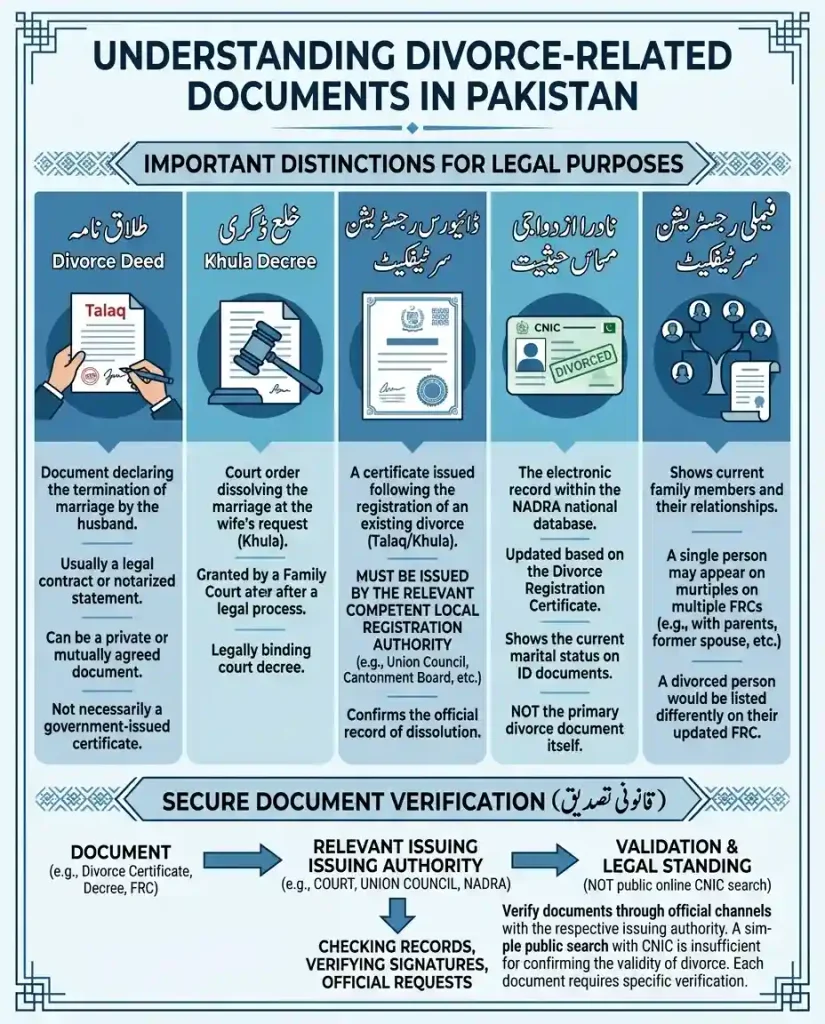
If you are searching for a NADRA Divorce Certificate in Pakistan, it is important to understand the difference between a Divorce Deed, Talaq Nama, Khula Decree, Divorce Registration Certificate and NADRA marital-status record. These documents are related, but they do not all serve the same legal or administrative purpose.
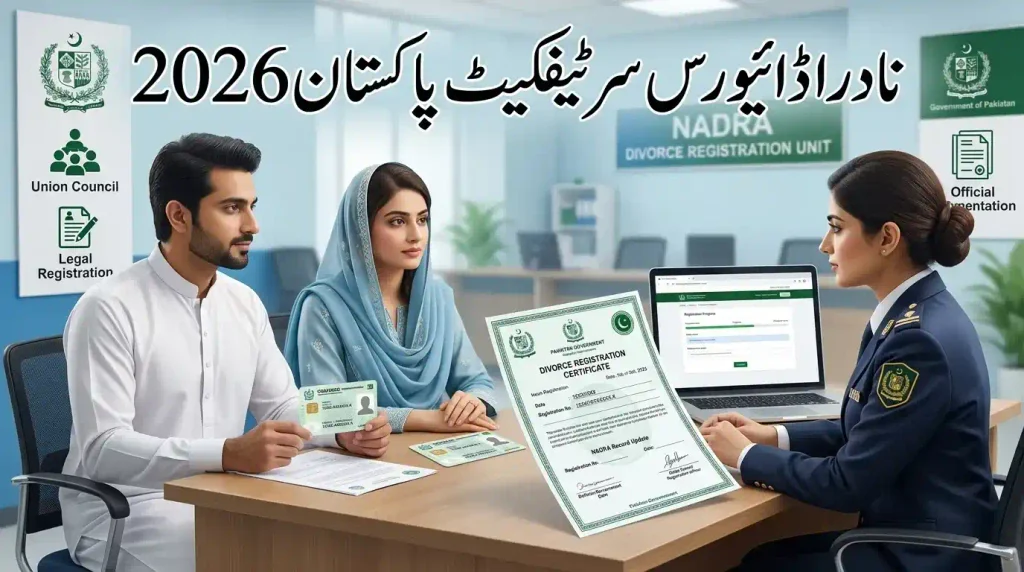
In everyday conversation, many people call the computerized divorce document a “NADRA Divorce Certificate”. However, the divorce registration certificate is generally issued through the concerned Union Council, Municipal Committee, Village Council, Neighborhood Council or other competent local authorities, depending on the area. NADRA is relevant because civil-registration information can be transmitted into the national identity system and because your marital status and family information may need to be updated with NADRA after registration.
This guide explains the Divorce Certificate Pakistan 2026 process, including Talaq registration, Khula, required documents, fees, processing time, online divorce registration, NADRA record updates, FRC, verification, overseas Pakistani requirements, MOFA attestation and common mistakes.
What Is a Divorce Certificate in Pakistan?
A Divorce Registration Certificate is the official civil-registration document showing that the dissolution of a marriage has been registered by the competent local authority.
The document should not be confused with the initial Talaq Nama, divorce deed or Family Court decree. Those documents may form part of the legal process, but the registration certificate is the formal civil record issued after the applicable registration procedure has been completed.
In Punjab, the official Local Government & Community Development Department states that the concerned Union Council or Municipal Committee where the marriage/Nikah Nama was registered issues the divorce certificate.
In Khyber Pakhtunkhwa, registration of divorce is handled through the Village Council or Neighborhood Council under the provincial civil-registration framework.
Therefore, the phrase “NADRA Divorce Certificate” should generally be understood as a commonly searched term for a computerized divorce registration document rather than assuming that NADRA itself is the issuing local authority in every case.
NADRA Divorce Certificate vs Divorce Registration Certificate
These terms are often used interchangeably online, which creates confusion.
| Term | Main purpose |
| Divorce Deed / Talaq Nama | Written document initiating or recording a talaq |
| Khula Decree | Family Court order in a Khula case |
| Divorce Registration | Registration of the dissolution with the competent local authority |
| Divorce Registration Certificate | Official certificate issued after registration |
| NADRA Marital Status Update | Updating the person’s identity/family record after the divorce is registered |
| FRC | NADRA document showing family composition based on its records |
The uploaded draft correctly identifies the different documents but overstates the role of NADRA as the direct issuer. Current official Punjab guidance confirms that the concerned Union Council or Municipal Committee issues the divorce certificate.
Is Divorce Legally Complete After Saying Talaq?
A verbal pronouncement of talaq should not be treated as the end of the statutory registration process.
Under Section 7 of the Muslim Family Laws Ordinance, 1961, a husband who pronounces talaq must give written notice to the Chairman concerned and provide a copy to the wife. The law provides that, subject to its provisions, talaq does not become effective until the expiration of 90 days from the date the notice is delivered to the Chairman, with a separate rule where the wife is pregnant. The Chairman is also required to constitute an Arbitration Council within 30 days of receiving the notice for reconciliation.
This means that people should not assume that the date of verbal pronouncement and the date of legal effectiveness under the statutory process are automatically the same.
Your uploaded draft correctly highlights the importance of the written notice and 90-day statutory period.
Divorce Laws and Legal Framework in Pakistan
The divorce process can involve several laws and legal procedures depending on the circumstances.
Important legislation includes:
- Muslim Family Laws Ordinance, 1961
- Dissolution of Muslim Marriages Act, 1939
- Family Courts Act, 1964
- Applicable provincial civil-registration laws and rules
- Relevant personal-law provisions
Section 7 of the Muslim Family Laws Ordinance specifically deals with talaq, written notice and the statutory reconciliation period. Section 8 applies the relevant procedure, so far as applicable, to dissolution of marriage otherwise than by talaq, including delegated divorce and other forms of dissolution.
Because divorce procedures can differ according to the type of case and province/territory, a person should confirm the requirements with the relevant local registration authority or qualified family-law professional.
Divorce Certificate Procedure in Pakistan 2026
The exact process depends on whether the divorce is through Talaq, Khula, delegated divorce or another legally recognized route.
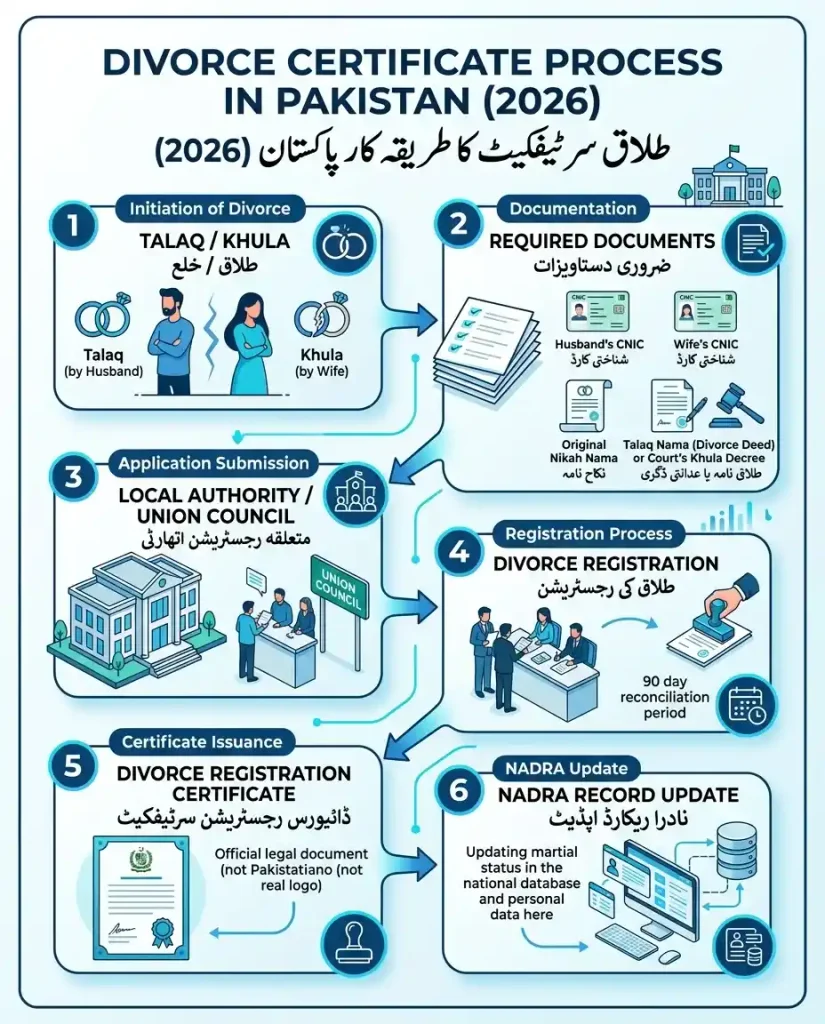
A general process is:
Step 1: Prepare the Relevant Divorce Document
Depending on the case, this may include:
- Talaq notice or Divorce Deed
- Khula decree
- Court order
- Delegated divorce documentation
- Mutual divorce documentation
- Supporting identity and marriage records
Step 2: Submit the Documents to the Relevant Authority
The documents are submitted to the concerned Union Council, Municipal Committee, Village Council, Neighborhood Council, Arbitration Council or other competent authorities, according to the location and applicable law.
Step 3: Reconciliation / Statutory Proceedings
For talaq cases covered by Section 7, the statutory reconciliation procedure applies. The law provides for an Arbitration Council and a 90-day period calculated from delivery of the written notice to the Chairman, subject to the statutory provisions.
Step 4: Divorce Registration
After the applicable legal and administrative requirements are completed, the divorce is entered into the relevant civil-registration record.
Step 5: Obtain the Divorce Registration Certificate
The competent local authority issues the divorce registration certificate.
Step 6: Update NADRA Records
After registration, the person may need to update their NADRA marital status and family information, particularly where the divorce affects spouse linkage or other identity records.
NADRA’s current services include civil-registration-related services and family-composition facilities, while its FRC system reflects family information recorded with NADRA.
Divorce Certificate Process for Talaq
For a husband who pronounces talaq, Section 7 requires written notice to the Chairman and a copy to the wife. The statutory 90-day period is linked to delivery of that notice to the Chairman, not simply the date on which the husband verbally pronounced talaq.
The general sequence is:
Talaq Pronouncement → Written Notice → Submission to Concerned Authority → Notice to Wife → Arbitration/Reconciliation → Statutory Period → Divorce Registration → Divorce Certificate → NADRA Record Update
The exact administrative steps and forms may vary by jurisdiction.
Khula Divorce Certificate in Pakistan
Khula is different from a husband’s talaq.
A woman seeking dissolution of marriage through Khula may proceed through the Family Court. Where a court decree is obtained, the decree is then used for the subsequent registration process with the competent local authority.
A Khula decree should not automatically be treated as identical to the final civil-registration certificate. The decree is the court’s judicial document, while the divorce registration certificate records the dissolution in the relevant civil-registration system.
Punjab’s official guidance specifically states that applicants for divorce registration may provide documentary evidence including a divorce order issued by a court of law and other relevant evidence to the concerned Union Council or Municipal Committee.
Does the 90-Day Period Apply to Khula?
The 90-day statutory process must be handled carefully because the legal route for Khula is different from a husband’s talaq.
The uploaded draft states that the 90-day period starts when a Khula decree is submitted to the Union Council. However, readers should not generalize the talaq rule in Section 7 to every court-based dissolution without considering the applicable law, court decree and local registration procedure.
For an actual Khula case, the Family Court order and the concerned registration authority’s requirements should be followed.
Documents Required for Divorce Certificate
Required documents vary by jurisdiction and type of divorce, but commonly requested documents can include:
- Original divorce deed or Talaq Nama
- Copy of divorce deed/Talaq Nama
- CNIC copies of husband and wife
- CNIC copies of fathers, where required
- Original/copy of Nikah Nama or marriage record
- Family Court Khula decree, where applicable
- Court orders or other supporting documents
- Divorce registration application/form
- Written statements or affidavits where required
- Passport copies for relevant overseas or foreign-national cases
- Power of Attorney for certain overseas applications
Punjab’s official guidance confirms that the applicant may be required to provide written statements and documentary evidence, including a court divorce order or other relevant evidence.
KP’s official civil-registration guidance lists a prescribed divorce-registration form and supporting documents such as written statements and a divorce deed/Talaq Nama or an order issued by a court or competent authority.
Divorce Certificate Requirements for Overseas Pakistanis
Overseas Pakistanis may have additional documentation requirements, especially when a person cannot appear personally in Pakistan.
Depending on the circumstances, the process may involve:
- CNIC/NICOP copies
- Passport copies
- Nikah Nama
- Talaq notice or divorce deed
- Khula decree where applicable
- Power of Attorney
- Embassy/Consulate attestation
- Ministry of Foreign Affairs requirements
- Documents required by the relevant Union Council or local authority
A Power of Attorney should not be treated as a universal requirement in every divorce case; it depends on the applicant’s circumstances and the authority handling the matter.
Divorce Certificate for Foreign Spouse
Cases involving a foreign spouse can require additional documentation.
For international document use, Pakistan’s Ministry of Foreign Affairs provides specific requirements for divorce certificates. MOFA states that divorce certificates for attestation should be issued by the Chairman of the Arbitration Council or Secretary Union Council, and additional requirements can apply depending on whether the document is an original, photocopy or divorce deed.
NADRA Marital Status Update After Divorce
Obtaining a divorce registration certificate and updating your NADRA record are related but separate administrative steps.
After the divorce has been properly registered, you may need to update:
- Marital status
- Spouse information
- Family linkage
- Relevant CNIC information
- Family Registration Certificate information
NADRA’s published service information recognizes marital status as a demographic field that can be updated when a change in marital status occurs.
For an actual record modification, the applicant should follow the current NADRA procedure and provide the required supporting divorce documentation.
What Happens to the FRC After Divorce?
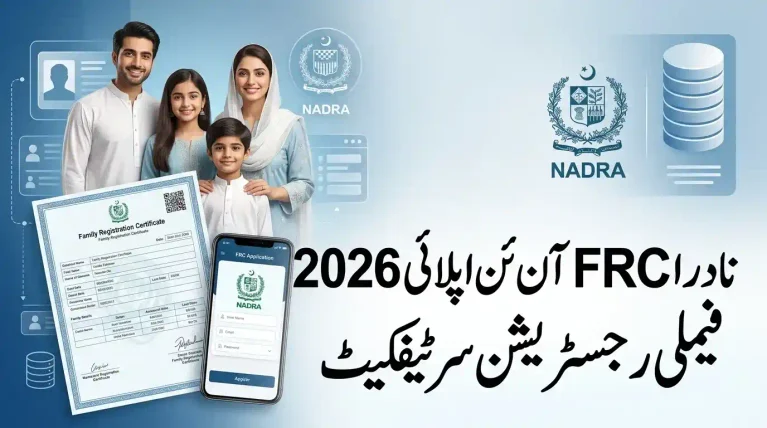
The Family Registration Certificate (FRC) is issued by NADRA and reflects family-composition information recorded in the NADRA system.
NADRA currently provides FRC categories including:
- FRC by Birth
- FRC by Marriage
- FRC by Adoption
- FRC by All
FRC by Marriage can contain spouse and children information.
If the NADRA family record has not been updated after divorce, the FRC may not immediately reflect the expected change. Therefore, updating the underlying NADRA record can be important when the FRC is required for immigration, visa or other official purposes.
Can You Check a Divorce Certificate Online by CNIC?
There is no general public CNIC-based divorce database that allows anyone to enter another person’s CNIC and publicly view their divorce status.
Divorce records contain sensitive personal and family information. Verification should therefore be carried out through the issuing authority or another authorized institutional process.
Your original draft correctly warns readers against websites claiming to provide unrestricted divorce-status searches.
Do not provide your CNIC, divorce certificate, tracking information or personal family documents to an unknown website or social-media account claiming to offer a “NADRA divorce check.”
How to Verify a Divorce Certificate
The appropriate verification method depends on where the certificate was issued.
Possible official routes include:
- Contacting the Union Council/Municipal Committee that issued the certificate.
- Contacting the relevant Arbitration Council.
- Following the verification procedure of the relevant provincial/local authority.
- Providing the original certificate and supporting identification when requested.
- Using institutional verification where required by a court, embassy or government department.
KP’s published rules, for example, state that a divorce document is verified from the concerned council from which it was issued or its successor council.
Therefore, readers should not assume that every certificate can be verified through the same NADRA online method.
Divorce Certificate Fee in Pakistan 2026
There is no single nationwide divorce-certificate fee that applies identically to every province, district or local authority.
Fees can depend on:
- Province
- Union Council/local authority
- Type of application
- Normal or urgent processing
- Duplicate/correction request
- Additional attestation or authentication services
Punjab’s official FAQ confirms that the concerned Union Council or Municipal Committee handles divorce registration but does not provide a single nationwide fee for all Pakistan.
For this reason, websites claiming that “NADRA Divorce Certificate Fee is exactly Rs. X everywhere in Pakistan” should be treated cautiously.
Divorce Certificate Processing Time
Processing time also varies by jurisdiction and case.
For example, Islamabad Capital Territory currently lists a divorce-registration process involving record checking, data entry, proofreading, final printing and signature by the Chairman Arbitration Council, with a listed processing fee of Rs. 250 on its official service page.
KP also has its own local-government process and designated authorities.
Therefore, applicants should confirm the current fee and processing time with the relevant local authority rather than relying on a nationwide figure.
Punjab Divorce Certificate Procedure
In Punjab, the official Local Government & Community Development Department states that the concerned Union Council or Municipal Committee where the marriage/Nikah Nama was registered issues the divorce certificate.
The applicant may be required to provide written statements and supporting documentary evidence, including a divorce order issued by a court where applicable.
The basic process is:
Prepare divorce documents → Submit application to concerned UC/MC → Complete required proceedings → Divorce registration → Obtain certificate → Update NADRA record if required
Khyber Pakhtunkhwa Divorce Certificate Procedure
In KP, the Village Council or Neighborhood Council is responsible for registration and certification of vital events including divorce.
The official KP Local Government Department lists divorce registration as a local-government service and identifies the Secretary of the relevant council as the designated officer in its service framework.
KP guidance also provides a divorce-registration process involving the prescribed form, written statements and supporting divorce documents.
Islamabad Divorce Registration Certificate
Islamabad Capital Territory has a separate administrative process.
The ICT Administration currently lists the divorce-registration process as involving:
- Appearance before the Arbitration Council
- Record checking
- Data entry
- Proofreading
- Final printing
- Signature by the Chairman Arbitration Council
The official page lists the required divorce form, original and copy of divorce papers, CNIC copies of both parties and CNIC copies of the fathers and currently lists a Rs. 250 processing fees.
Because fees and procedures can change, applicants should verify the current ICT requirements before visiting the office.
Is Online Divorce Certificate Available in Pakistan?
“Online divorce” can mean different things.
Some jurisdictions are introducing or expanding digital civil-registration services. For example, Sindh announced a Civil Registration Management System (CRMS) mobile application covering registration of birth, death, marriage and divorce.
However, online availability does not mean that every Pakistani citizen can simply enter a CNIC number on a public website and instantly download another person’s divorce certificate.
Digital registration, online application, document uploading and public record searching are different things.
Before using any online service, verify that it belongs to the official government authority responsible for the service.
Can Overseas Pakistanis Apply Without Visiting Pakistan?
An overseas Pakistani may be able to handle parts of the process through an authorized representative depending on the case and requirements of the relevant authority.
Where a Power of Attorney is used, it should be properly prepared and attested according to the requirements of the Pakistani diplomatic mission and the concerned authority.
Do not assume that one Power of Attorney format works for every Union Council, court or province.
Divorce Certificate Attestation for Use Abroad
If you need a Pakistani divorce certificate for immigration, remarriage, visa or another foreign-government purpose, you may need MOFA attestation or apostille/legalization, depending on the destination country and its requirements.
Pakistan’s Ministry of Foreign Affairs lists the Divorce Certificate among documents eligible for attestation services.
MOFA’s published guidance also states that divorce certificates should be issued by the appropriate Arbitration Council/Union Council authority and provides additional requirements for divorce deeds and supporting proceedings.
Always check the current requirements of both MOFA Pakistan and the destination country’s embassy/consulate.
Is a Divorce Certificate Internationally Valid?
A Pakistani divorce certificate can be used for international administrative purposes, but acceptance is not automatic in every country.
A foreign authority may require:
- Original divorce certificate
- MOFA attestation or apostille
- Certified translation
- Embassy/consular legalization
- Court documents
- Additional proof of finality
- Passport/CNIC documentation
The exact requirements depend on the country where the document will be submitted.
What If the Divorce Certificate Is Lost?
If your divorce certificate is lost, contact the authority that originally issued/registered the divorce.
Do not assume that NADRA will issue a replacement for a document that was originally issued by a Union Council, Municipal Committee or another local registration authority.
You may be asked for:
- CNIC
- Existing copy/photo of the certificate, if available
- Registration details
- Divorce record information
- Application for duplicate/replacement certificate
- Applicable fee
The exact procedure depends on the issuing authority.
What If There Is an Error on the Divorce Certificate?
If the certificate contains an incorrect:
- Name
- CNIC number
- Father’s name
- Date of marriage
- Date of divorce
- Registration number
- Other personal information
contact the issuing registration authority immediately.
Do not attempt to alter the certificate yourself.
Bring documentary proof supporting the requested correction. Some provincial rules provide formal procedures for correction of civil-registration certificates. For example, KP’s published rules provide a formal correction process with supporting documents.
Divorce Certificate and Remarriage
A person planning to remarry should ensure that the previous marriage has been properly dissolved and registered according to the applicable legal procedure.
A Talaq Nama, Khula decree or divorce deed should not automatically be treated as a substitute for every registration document required by the relevant authority.
For remarriage, immigration or embassy purposes, keeping the final divorce registration certificate and supporting legal documents is strongly advisable.
Divorce Certificate and Children’s Records
Divorce does not automatically cancel a child’s NADRA identity documents.
Children’s:
- CRC/B-Form
- CNIC/Juvenile Card
- Family linkage
- FRC information
- Custody-related records
may require separate consideration depending on the circumstances.
A divorce certificate establishes the dissolution of the marriage; it is not by itself a custody order.
Divorce, Custody and Maintenance Are Different Issues
Divorce registration should not be confused with:
- Child custody
- Maintenance
- Dower/Haq Mehr
- Child support
- Property disputes
- Visitation rights
These matters may require separate agreements, court proceedings or orders.
The divorce certificate itself generally records the civil status of the marriage dissolution rather than resolving every financial or family dispute between the parties.
Common Mistakes to Avoid
Avoid these common mistakes when applying for a divorce certificate:
- If verbal talaq alone completes every registration requirement.
- Confusing a Talaq Nama with a Divorce Registration Certificate.
- Treating a Khula decree as the same document as the final registration certificate.
- Assuming NADRA is always the direct issuing authority.
- Failing to submit the required notice or decree to the relevant local authority.
- Using an outdated form.
- Providing incorrect CNIC information.
- Ignoring the NADRA marital-status update after registration.
- Assuming every province follows the same procedure.
- Paying an unofficial agent without checking the government office.
- Uploading CNIC/divorce documents to an unknown website.
- Assuming an online divorce-status checker is an official NADRA service.
- Forgetting MOFA/embassy requirements when the document will be used abroad.
- Failing to keep copies of the original divorce documents.
NADRA Divorce Certificate Checklist
Before visiting the relevant authority, have the following documents ready where applicable:
- Original CNIC
- CNIC copy
- Spouse’s CNIC copy
- Nikah Nama/marriage record
- Talaq Nama/divorce deed
- Khula decree, if applicable
- Court order, if applicable
- Passport/NICOP for overseas cases
- Power of Attorney, where applicable
- Required application form
- Supporting affidavit/statements
- Previous divorce certificate copy, if applying for replacement
- Additional documents requested by the local authority
Quick Comparison: Divorce Documents in Pakistan
| Document | Usually issued/prepared by | Main purpose |
| Talaq Notice | Husband / authorized representative | Written notice of talaq |
| Divorce Deed / Talaq Nama | Parties/lawyer/document preparer | Records of divorce declaration |
| Khula Decree | Family Court | Judicial dissolution in Khula case |
| Divorce Registration | Local registration authority | Records dissolution in civil register |
| Divorce Registration Certificate | Concerned competent local authority | Official registration certificate |
| NADRA Record Update | NADRA | Updates identity/family information |
| FRC | NADRA | Shows recorded family composition |
| MOFA Attestation/Apostille | Ministry of Foreign Affairs | International document use |
Final Words
The Divorce Certificate in Pakistan 2026 is an important document for proving that a marriage dissolution has been formally registered. However, it is important to distinguish between the Talaq Nama, Divorce Deed, Khula Decree, Divorce Registration Certificate and NADRA marital-status record.
The exact procedure depends on the type of divorce and the province or territory where the registration is handled. In Punjab, the concerned Union Council or Municipal Committee handles divorce registration; KP uses its Village/Neighborhood Council framework; Islamabad has its own Arbitration Council process; and other provinces are increasingly moving civil-registration services toward digital systems.
For the most accurate 2026 requirements, applicants should confirm the current documents, fee, processing time and verification method directly with the relevant government authority before applying.
Important: This article is an information guide, not a substitute for individualized legal advice. Divorce, Khula, custody, maintenance and international recognition can involve case-specific legal issues. For a disputed or complex case, consult a qualified family-law professional.
Official Sources
- Pakistan Code — Muslim Family Laws Ordinance, 1961
- Punjab Local Government & Community Development Department — Divorce Registration guidance
- Khyber Pakhtunkhwa Local Government — Civil Registration/Vital Statistics
- ICT Administration — Divorce Registration Certificate
- NADRA — Family Registration Certificate and civil-registration services
- Ministry of Foreign Affairs Pakistan — Document Attestation/Apostille guidance