Nadra Launches New Chipless ID Card With QR Code — Here’s What Changes for You
ISLAMABAD: The National Database and Registration Authority (Nadra) has introduced a new chipless National Identity Card (NIC) featuring a secure QR code, replacing the microchip-based technology used in Pakistan’s identity cards for nearly 14 years.
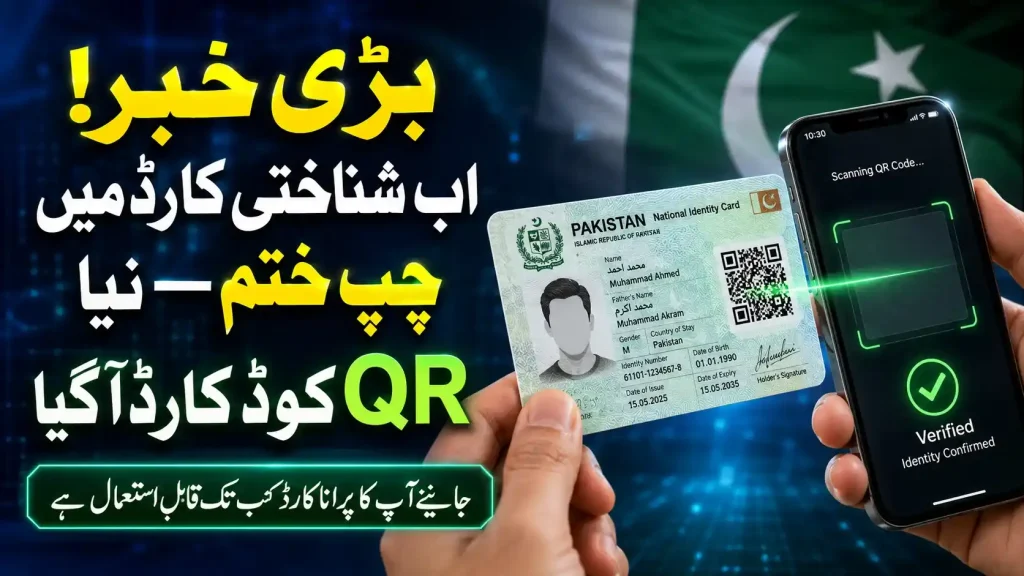
According to a statement issued by Nadra on Friday, the new identity card has been manufactured locally by the National Security Printing Company (NSPC) in Karachi in accordance with Nadra’s technical, security and production requirements.
The new card replaces the traditional embedded microchip with a secure QR code that allows identity information to be verified through a smartphone or other camera-enabled device using Nadra’s Pak Identity (PakID) mobile application.
The federal government approved the introduction of the QR code-based identity card on February 23 this year as part of broader efforts to modernise Pakistan’s identity documentation system.
QR Code Enables Faster Identity Verification
The QR code on the new National Identity Card contains the cardholder’s personal information and photograph. Nadra said the technology will help authorised organisations retrieve and record identity information, including names, addresses and other personal details, more consistently.
The system is also expected to reduce manual data-entry mistakes when institutions enter citizens’ information into their databases.
In addition to standard identity details, the new card will display a family number and symbols identifying certain categories of cardholders, including persons with disabilities, senior citizens, organ donors and residents of Azad Jammu and Kashmir (AJK).
The cardholder’s name and address will be printed in both Urdu and English.
Why Nadra Is Replacing the Chip
Nadra said the chip-based Smart NIC, introduced around 14 years ago, was not fully utilised because the specialised chip readers and supporting infrastructure required to process the cards never became widely available.
The QR code-based system is intended to address that limitation by allowing identity information to be verified using commonly available smartphones, cameras and compatible software.
According to Nadra, telecom operators, banks, hospitals, Pakistan Railways, police departments and other authorised institutions will receive software capable of reading and verifying the QR code.
The authority said the new card’s visible and concealed security features have also been updated to meet current security requirements while taking into account Pakistan’s domestic manufacturing capabilities.
Phased Rollout of New CNIC
The transition to the new identity card format will take place in phases.
The QR code-based card will begin replacing the standard CNIC from Friday, while from January 2027, the new format is scheduled to cover all identity-card categories, including National Identity Cards for Overseas Pakistanis (NICOPs) and Juvenile Cards.
In the final phase, the Pakistan Origin Card (POC) will also be transitioned to the chipless format.
Nadra has clarified that citizens who already possess identity cards do not need to replace them immediately. Existing identity cards will remain valid until their stated expiry dates.
Government Updates Identity Card Rules
The move follows amendments introduced by the federal government in February to the National Identity Card Rules, 2002 and Pakistan Origin Card Rules, 2002.
The amendments were aimed at updating Pakistan’s legal framework for identity documents and formally recognising the QR code as a security and verification feature.
The revised rules also allow Nadra to use a QR code or “any other technological feature” instead of the existing microchip. This provision gives the authority greater flexibility to adopt newer identity-verification technologies in the future without requiring the rules to be amended each time a new technology is introduced.
With the latest transition, Nadra is moving Pakistan’s identity-card system away from specialised chip-based infrastructure toward a locally manufactured, smartphone-compatible QR code verification system.