Blocked CNIC in Pakistan: Unblock Process, NADRA Rules & Legal Remedies
A blocked CNIC in Pakistan can disrupt almost every part of daily life. Banking, employment, property transactions, telecommunications, travel documents and access to government services may become difficult when a person’s identity record is restricted.
However, a blocked CNIC should not automatically be treated as a final decision that a person has lost Pakistani citizenship. The correct response depends on why the CNIC was blocked, what action NADRA has taken, whether a notice or order was issued, and what evidence the citizen can provide.
NADRA has statutory powers concerning national identity cards, but those powers are subject to the NADRA Ordinance, 2000, and applicable legal procedures. Section 18 is particularly important where cancellation, impounding or confiscation of an identity card is involved because it contains a show-cause requirement and an appeal mechanism.
For people dealing with a blocked CNIC, the most effective approach is therefore to identify the reason for the restriction, respond through the appropriate administrative channel, preserve a complete documentary record and, where necessary, seek appropriate legal relief.
What Does a Blocked CNIC Mean in Pakistan?
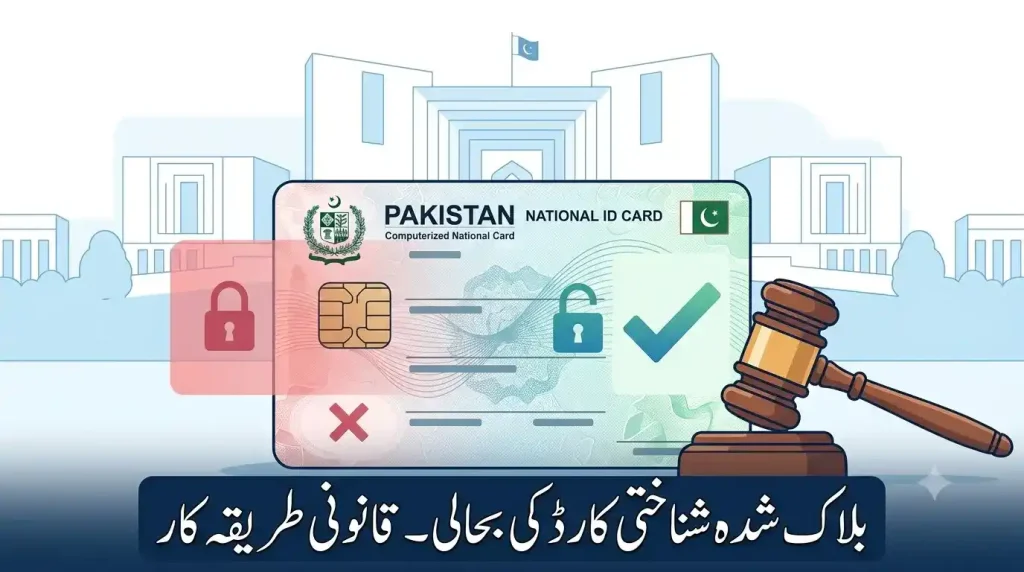
A blocked CNIC generally means that the identity record has been restricted or placed under verification, affecting the holder’s ability to use the CNIC normally.
The exact meaning depends on the action taken against the record. A person may encounter terms such as:
- blocked CNIC;
- suspended CNIC;
- cancelled CNIC;
- impounded CNIC; or
- CNIC placed under verification.
These terms should not automatically be treated as identical.
A restriction may result from an identity-data discrepancy, family-tree issue, suspected duplicate registration, citizenship verification, a court order, or another legal or administrative concern.
The first step is therefore to establish exactly what NADRA has done and why.
A blocked CNIC also does not necessarily mean that citizenship has been conclusively cancelled. In the landmark Hafiz Hamdullah litigation, the Islamabad High Court considered the distinction between NADRA’s role in maintaining identity records and the legal determination of citizenship. The court held that NADRA could not adjudicate citizenship status in the manner challenged before it and ordered restoration of the petitioners’ CNICs.
Why Does NADRA Block or Suspend a CNIC?
There is no single reason why CNIC may become restricted. The underlying issue should always be identified before deciding how to challenge or resolve it.
1. Data or Record Discrepancies
A CNIC may be flagged where information in NADRA’s database conflicts with supporting records.
Examples may include differences in:
- name spelling;
- date of birth;
- place of birth;
- father’s or mother’s name;
- family-tree information; or
- other identity particulars.
In these cases, documentary and biometric verification may be required.
2. Suspected Fake or Duplicate Registration
NADRA may investigate records where there is an allegation of fraudulent registration, multiple identity cards, tampering or other irregularities.
Section 18 of the NADRA Ordinance specifically addresses circumstances involving matters such as multiple cards obtained on the same eligibility criteria, tampering with particulars and forged cards.
3. Citizenship or Nationality Verification
Some of the most complicated cases involve questions about Pakistani citizenship.
These cases can arise where authorities question a person’s nationality, ancestry, place of birth or eligibility for Pakistani citizenship.
The legal distinction between identity registration and citizenship determination becomes especially important in such cases.
4. Family Tree or Parentage Issues
Problems involving the family tree can also lead to verification requirements.
For example, a discrepancy concerning a parent, sibling, spouse or other family member may affect the information recorded in the NADRA database.
The appropriate response depends on what information is disputed and which documents establish the correct relationship.
5. Security or Intelligence-Related Verification
Some CNIC cases involve references from government or security agencies.
These cases may be more complicated because the individual may need to address information that is not apparent from the ordinary NADRA record.
A person facing such a restriction should obtain professional legal advice if the administrative process does not provide a clear explanation or opportunity to respond.
6. Court Orders or Legal Proceedings
A CNIC may also become involved in litigation or proceedings before a court or other competent authority.
Where a court order is the basis for a restriction, the remedy may require addressing the order itself rather than simply submitting another application to NADRA.
How to Check If Your CNIC Is Blocked
Before preparing an application, determine your current CNIC status and the reason for the restriction.
You can:
- Contact NADRA through its current official support channels.
- Use the official PakID platform where the relevant service is available.
- Visit a NADRA Registration Centre.
- Ask for clarification regarding the reason for the restriction.
- Preserve your complaint or application reference number.
- Request copies of any notice or order relevant to the action.
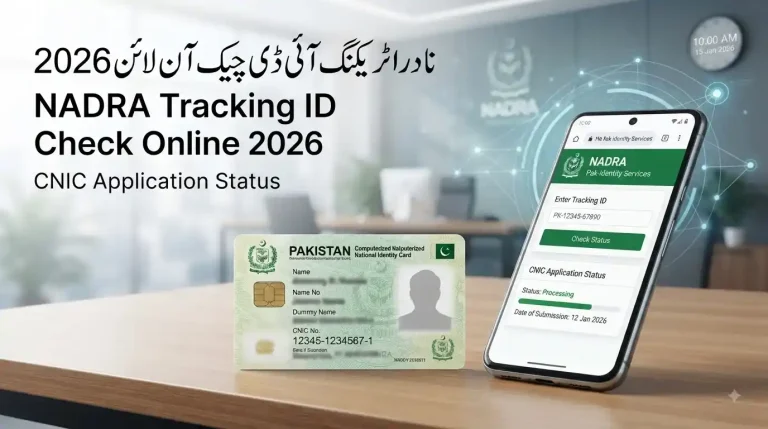
NADRA currently lists 1777 as its mobile-user helpline and provides official complaint and support facilities through its website.
Do not rely on old helpline numbers or unofficial websites without checking NADRA’s current official information.
What to Do If Your CNIC Is Blocked
If you discover that your CNIC has been blocked, follow a structured process rather than immediately assuming that litigation is the only solution.
Step 1: Find Out the Exact Reason
The reason for the restriction determines the appropriate remedy.
Ask whether the problem concerns:
- identity information;
- biometric verification;
- family-tree information;
- citizenship;
- suspected duplicate registration;
- alleged fraud;
- a court order; or
- another government reference.
Step 2: Obtain Any Notice or Order
If NADRA has issued a written notice or order, obtain a copy and carefully examine the legal basis stated in it.
This document can be extremely important if the matter later reaches an appellate authority or court.
Step 3: Gather Supporting Documents
Prepare documents that directly address the issue.
Depending on the case, these may include:
- CNIC;
- birth certificate;
- B-form or child registration records;
- educational certificates;
- domicile;
- family records;
- old identity documents;
- government employment records;
- property or land records;
- passport records;
- family members’ CNICs; and
- relevant court orders or clearance documents.
Do not submit documents merely because they are available. Organize them around the specific question raised by NADRA.
Step 4: Submit the Administrative Application
Submit the appropriate application or complaint through NADRA’s prescribed process.
Keep copies of:
- the application;
- supporting documents;
- affidavits;
- receipts;
- complaint numbers;
- correspondence; and
- any response received from NADRA.
Step 5: Complete Verification
NADRA may require biometric verification, documentary verification or additional information.
Respond promptly to requests because delays in supplying documents can prolong the process.
Step 6: Appeal or Escalate Where Appropriate
If an adverse order is passed, determine whether a statutory appeal is available.
Under Section 18(3) of the NADRA Ordinance, a person against whom an order has been made may appeal to the Federal Government within 30 days, subject to the statutory framework. The provision also requires an opportunity of hearing.
Step 7: Consider Legal Proceedings
If administrative and statutory remedies do not resolve the matter, a lawyer can assess whether a constitutional petition or another legal remedy is appropriate.
Documents Required to Unblock a CNIC
There is no universal document list for every blocked CNIC. The required evidence depends on the reason for the restriction.
Basic Documents
Commonly useful documents include:
- original CNIC, if available;
- copies of CNICs of immediate family members;
- birth certificate;
- educational records;
- domicile;
- passport;
- family registration information;
- affidavit where appropriate; and
- any NADRA notice or order.
Documents for Citizenship Verification
Depending on the circumstances, older records may be particularly useful for establishing identity, residence or nationality.
These can include:
- old manual identity documents;
- pre-existing government records;
- educational records;
- domicile records;
- land records;
- government employment records;
- family or pedigree records; and
- other historical documents establishing Pakistani origin or residence.
The strongest evidence is evidence that directly answers the allegation or discrepancy identified by the authorities.
NADRA CNIC Blocking Rules Under Section 18
Section 18 of the NADRA Ordinance 2000 is one of the most important legal provisions in CNIC disputes involving cancellation, impounding or confiscation.
Under Section 18, an order cannot be made without the statutory procedure being followed, including written notice requiring the affected person to show cause why the proposed order should not be made. The provision identifies specific circumstances in which cancellation, impounding or confiscation may be ordered.
This means that a person challenging a CNIC action should not rely only on the general argument that “NADRA cannot block my CNIC.”
Instead, the stronger legal questions are:
- What exact action has NADRA taken?
- Which statutory provision has NADRA relied upon?
- Was written notice issued?
- Was the affected person given an opportunity to respond?
- What evidence supports the decision?
- Was the decision made by the competent authority?
- Is a statutory appeal available?
- Has another court or government authority issued an order?
These questions create a much stronger legal framework for challenging an unlawful decision.
Can NADRA Block a CNIC Without a Show-Cause Notice?
Where the action falls within Section 18, the statutory show-cause requirement is highly significant.
Section 18 requires written notice before an order to cancel, imposed or confiscate the card is made. The affected person must be given an opportunity to show cause against the proposed action.
Therefore, if a person discovers that a Section 18 order has been made without the required procedure, the procedural defect may become an important ground for an appeal or judicial challenge.
However, every situation described informally as a “CNIC block” should not automatically be treated as a Section 18 cancellation order.
The first task is to establish the legal character of the action.
Can NADRA Cancel a CNIC Based on an Intelligence Report?
This is one of the most important questions in citizenship-related CNIC disputes.
An intelligence report may trigger scrutiny or verification, but the existence of an intelligence reference does not automatically answer every legal question concerning citizenship.
The Islamabad High Court’s decision in Hafiz Hamdullah Saboor v. Government of Pakistan, PLD 2021 Islamabad 305, is particularly important. The court dealt with CNICs that had been suspended or withdrawn following questions regarding citizenship and held that NADRA could not itself adjudicate the petitioners’ citizenship status in the manner challenged before the court. The court ordered restoration of their CNICs.
The case demonstrates an important principle: a dispute concerning a CNIC is not necessarily the same thing as a final legal determination of citizenship.
The relevant citizenship law, competent authority and applicable procedure must be considered.
Hafiz Hamdullah Case: What Did the Islamabad High Court Decide?
The Hafiz Hamdullah case is one of the most significant authorities for understanding the limits of NADRA’s role in citizenship-related CNIC disputes.
The petitioners challenged action concerning their identity cards after allegations questioned their Pakistani citizenship.
The Islamabad High Court considered NADRA’s statutory functions and the relationship between identity registration and citizenship law.
The court held that NADRA could not itself determine the petitioners’ citizenship status in the manner challenged and directed restoration of the CNICs.
For citizens facing a similar problem, the case is important because it highlights the need to distinguish between:
NADRA’s identity-registration functions
and
the legal determination of citizenship under the applicable citizenship law.
The precise facts of each case still matter, and a person should not assume that the judgment automatically determines the outcome of every CNIC dispute.
Can a Blocked CNIC Affect Your Bank Account, Job or Passport?
A CNIC is used extensively for identity verification, so restrictions can have significant practical consequences.
A blocked or invalid identity record may create difficulties with:
- banking services;
- employment documentation;
- mobile SIM verification;
- property transactions;
- government services;
- identity verification;
- passport-related services; and
- other transactions requiring valid identification.
The NADRA Ordinance itself recognizes the importance of identity documentation. Section 19 addresses the relationship between possession or production of a National Identity Card and the issuance of certain travel documents.
If a blocked CNIC has caused a specific financial or employment problem, keep documentary proof of that consequence. For example, preserve written communication from a bank or employer explaining why the service could not be provided.
Such evidence can help demonstrate the practical urgency of the matter.
How Long Does It Take to Unblock a CNIC?
There is no single processing time that applies to every blocked CNIC.
A straightforward identity or documentation issue may be resolved through routine verification, while a citizenship dispute, security reference, family-tree problem or court-related matter may require substantially more investigation.
The timeline can depend on:
- the reason for the block;
- the type of NADRA action;
- availability of supporting documents;
- biometric verification;
- responses from other government departments;
- statutory appeals;
- court proceedings; and
- the complexity of the underlying dispute.
For this reason, applicants should be cautious about websites that guarantee that every blocked CNIC will be restored within a specific number of days.
Instead, obtain a reference number, keep track of the application and request an update through NADRA’s official channels.
How to Unblock a CNIC in Islamabad
Islamabad-related cases may involve federal authorities and, depending on the circumstances, the Islamabad High Court.
The administrative process should normally begin by identifying the reason for the CNIC restriction and submitting the appropriate documentation to NADRA.
Where the dispute involves a federal decision, citizenship question, statutory violation or other matter falling within constitutional jurisdiction, a lawyer may assess whether proceedings before the Islamabad High Court are appropriate.
The important point is to establish the legal basis of the restriction before filing a petition.
How to Unblock a CNIC in Peshawar
For residents of Khyber Pakhtunkhwa, the administrative process likewise begins with NADRA and documentary verification.
Cases involving family records, citizenship questions, border-related documentation or other complex identity issues may require additional evidence.
Where administrative remedies fail, a lawyer can assess whether a constitutional petition before the Peshawar High Court is maintainable based on the facts and territorial jurisdiction.
The correct courting depends on the nature of the action, the respondents and the location of the relevant cause of action.
How to Challenge NADRA in the High Court
Article 199 of the Constitution provides constitutional jurisdiction to High Courts in appropriate cases.
A person considering a writ petition concerning a blocked CNIC should generally establish:
- What happened to the CNIC.
- Which authority took the action.
- What legal provision was relied upon.
- Whether a notice was issued.
- Whether the applicant was given an opportunity to respond.
- What documents were submitted.
- What response NADRA provided.
- Whether an appeal or alternative statutory remedy exists.
- What fundamental or legal right is alleged to have been infringed.
- What specific relief is required.
A petition may seek appropriate directions, including consideration of the applicant’s representation, setting aside an unlawful order or other relief available under the constitutional jurisdiction of the court.
Interim relief may also be requested where the circumstances justify urgent judicial intervention.
The availability of interim relief is discretionary and depends on the facts of the individual case.
What If NADRA Rejects Your CNIC Unblocking Application?
A rejection should not necessarily be treated as the end of the matter.
First, obtain the rejection or decision in writing if possible.
Then determine:
- why the application was rejected;
- whether additional documents can address the objection;
- whether an appeal is available;
- whether another authority must be approached;
- whether the issue arises from a court order; and
- whether judicial review is appropriate.
Where Section 18 applies, the statutory appeal mechanism should be considered carefully, including its applicable time limit.
For complex cases, particularly those involving citizenship allegations, intelligence references or previous litigation, professional legal advice can prevent procedural mistakes.
How to File a Writ Petition for a Blocked CNIC
A constitutional petition should be based on the actual facts and applicable law rather than a generic claim that the CNIC has been blocked.
The petition normally needs to identify the relevant respondents, describe the impugned action, explain the legal grounds and attach supporting material.
Useful documents may include:
- CNIC copy;
- NADRA notice;
- NADRA order;
- applications submitted to NADRA;
- receipts and complaint numbers;
- supporting citizenship documents;
- family records;
- correspondence with authorities;
- relevant court orders; and
- affidavits and other evidence required by the court.
The appropriate legal remedy should be determined by a lawyer after reviewing the specific case.
Common Mistakes to Avoid When Your CNIC Is Blocked
Mistake 1: Assuming the Block Means Citizenship Is Cancelled
A restriction on an identity record and a final legal determination of citizenship are not necessarily the same thing.
Mistake 2: Ignoring a NADRA Notice
If statutory notice has been served, do not ignore it. Deadlines can apply to responses and appeals.
Mistake 3: Submitting Random Documents
A large bundle of documents is not necessarily a strong case.
Each document should help answer the specific issue raised by NADRA.
Mistake 4: Using Outdated NADRA Information
Helpline numbers, procedures and online services can change. Always verify current information through NADRA’s official website.
Mistake 5: Going to Court Without Understanding the Administrative Record
Where appropriate, preserve your application, complaint, documents, notices and NADRA responses before escalating the matter.
Mistake 6: Relying on Unverified Legal Citations
Legal information must be particularly careful with case names, citations and statutory sections.
An incorrect citation can undermine an otherwise useful article.
Can You Unblock a CNIC Online?
Some NADRA services can be initiated or managed through the official PakID platform.
However, online availability does not mean that every blocked CNIC can be resolved entirely online.
Depending on the issue, NADRA may require:
- biometric verification;
- original documents;
- additional documentary evidence;
- an in-person appearance; or
- review by the relevant authority.
Therefore, use online services where available, but be prepared for additional verification where the case involves a disputed identity or citizenship issue. NADRA’s official platform should be used for current service information.
Can a Lawyer Help Unblock a Blocked CNIC?
A lawyer can be particularly useful when a CNIC dispute has moved beyond a straightforward documentation problem.
Professional assistance may help with:
- reviewing the reason for the block;
- examining a NADRA notice or order;
- preparing a written representation;
- organizing documentary evidence;
- dealing with an appeal;
- identifying the appropriate legal remedy;
- preparing a constitutional petition; and
- representing the applicant before the relevant court.
Legal assistance is especially important where the case involves allegations of fraud, disputed citizenship, intelligence references, criminal proceedings or previous court orders.
When Should You Contact a Lawyer?
Consider obtaining legal advice promptly if:
- NADRA has rejected your application;
- you received a Section 18 notice;
- your citizenship has been questioned;
- your CNIC was cancelled or impounded;
- an intelligence or security reference is involved;
- a court order is involved;
- your passport or banking access is affected;
- you have already submitted documents but received no meaningful response; or
- you are considering filing a constitutional petition.
The earlier the legal and administrative record is organized, the easier it may be to identify the appropriate remedy.
Final Takeaway: What Is the Best Way to Unblock a CNIC?
A blocked CNIC is a serious administrative and legal problem, but it should be approached as a process rather than an automatic verdict on citizenship.
Start by determining exactly why the CNIC has been restricted. Obtain the relevant notice or order, collect documents that directly address the issue, submit the appropriate application or representation to NADRA and preserve a complete record of every step.
If the matter involves a Section 18 order, pay close attention to the statutory notice and appeal requirements. If the dispute concerns citizenship or NADRA has acted beyond its lawful authority, the relevant citizenship law and constitutional remedies may become important.
Where administrative remedies fail, a qualified lawyer can determine whether an appeal, constitutional petition or another legal remedy is appropriate.
The most important rule is simple:
Do not guess why your CNIC was blocked. Find the legal and administrative reason first, then choose the remedy that matches it.